
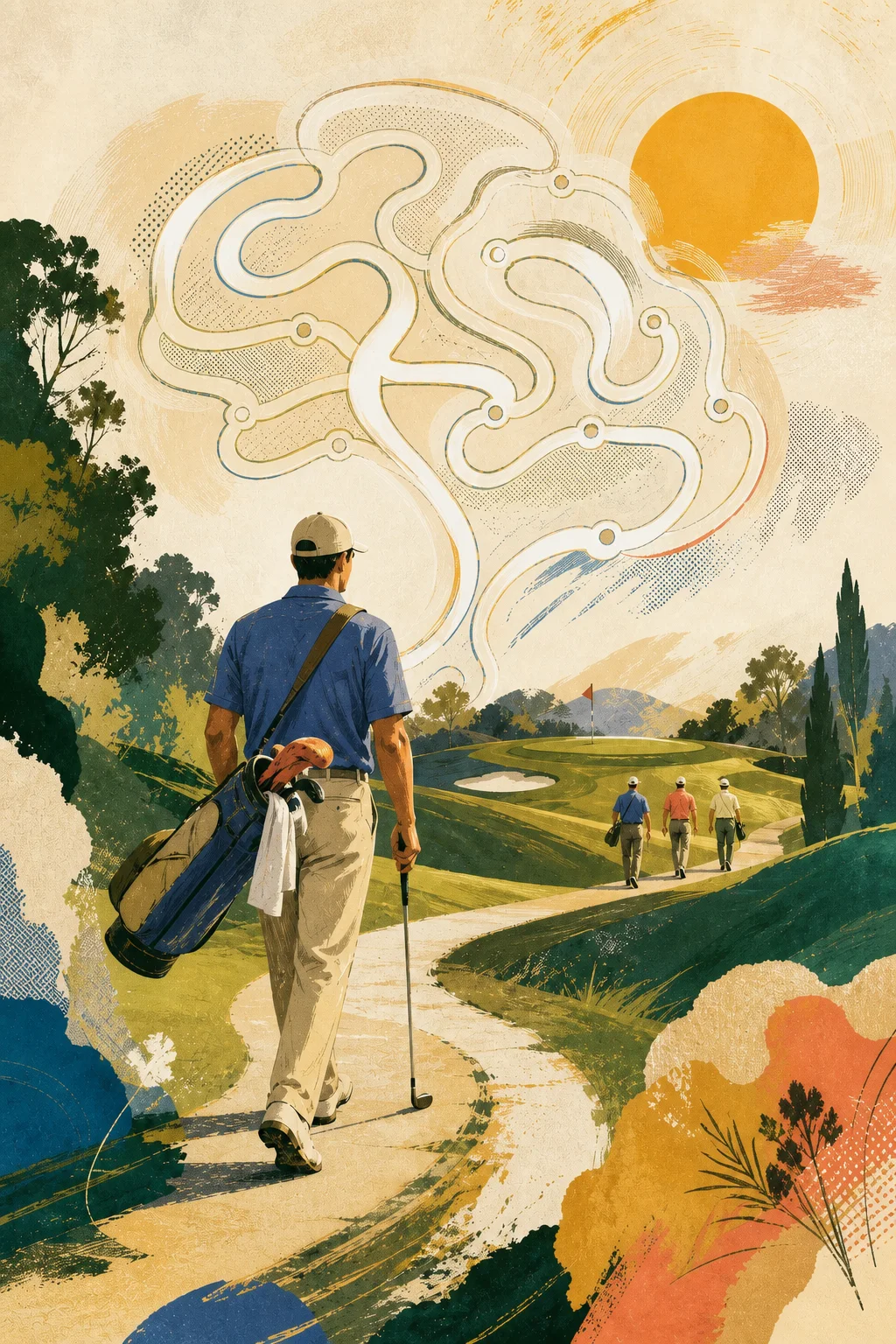
Golfers have always defended the habit as exercise, usually while reaching for a cart key. The more interesting evidence sits above the shoulders.
Start with the broadest finding. In 2008, researchers at Sweden's Karolinska Institutet published a study of just over 300,000 members of the Swedish golf federation. Golfers died at a rate about 40 percent lower than non-golfers of the same age, sex and socioeconomic group, which works out to roughly five extra years of life expectancy. Lower handicaps tracked with lower death rates, suggesting the people who played most got the most back. The authors were careful, as good researchers are, to note that a study like this shows a strong association rather than proof of cause. Golfers may differ from their neighbors in ways no dataset fully captures. Golf never needed a study to feel healthy. The size of the number is what turned heads.
What makes the finding believable is that each ingredient of a round has its own supporting research.
01 Movement
A walked 18 covers four miles or more over changing ground, which supplies a healthy share of the weekly activity most health authorities recommend, all in one round. The reason that matters to the brain: physical inactivity sits on the Lancet Commission's 2024 list of 14 dementia risk factors within a person's power to change. Exercise supports blood flow, and the brain is a demanding customer. Riders are not left out entirely, since even a cart round involves more walking than anyone admits, but the walked version does the real work.
02 Company
Also on that Lancet list: infrequent social contact. Loneliness in later life turns out to be a health risk in the same conversation as smoking and blood pressure, and it is the risk a standing golf game quietly manages. Four hours with the same three people, every week, for years, is a rhythm of friendship most adults lose after their working life ends. Golf is one of the few structures that keeps supplying it, with silences allowed and no agenda beyond the match.
03 Daylight
Golf also happens outside, which sounds too obvious to count until you notice how little time modern adult life spends there. Time in green space is consistently linked with lower stress, and a morning of natural daylight helps anchor sleep, which is when the brain does its filing. Golf hands you the outdoors four hours at a time, and nobody has to talk themselves into it the way they talk themselves onto a treadmill.
04 Decisions
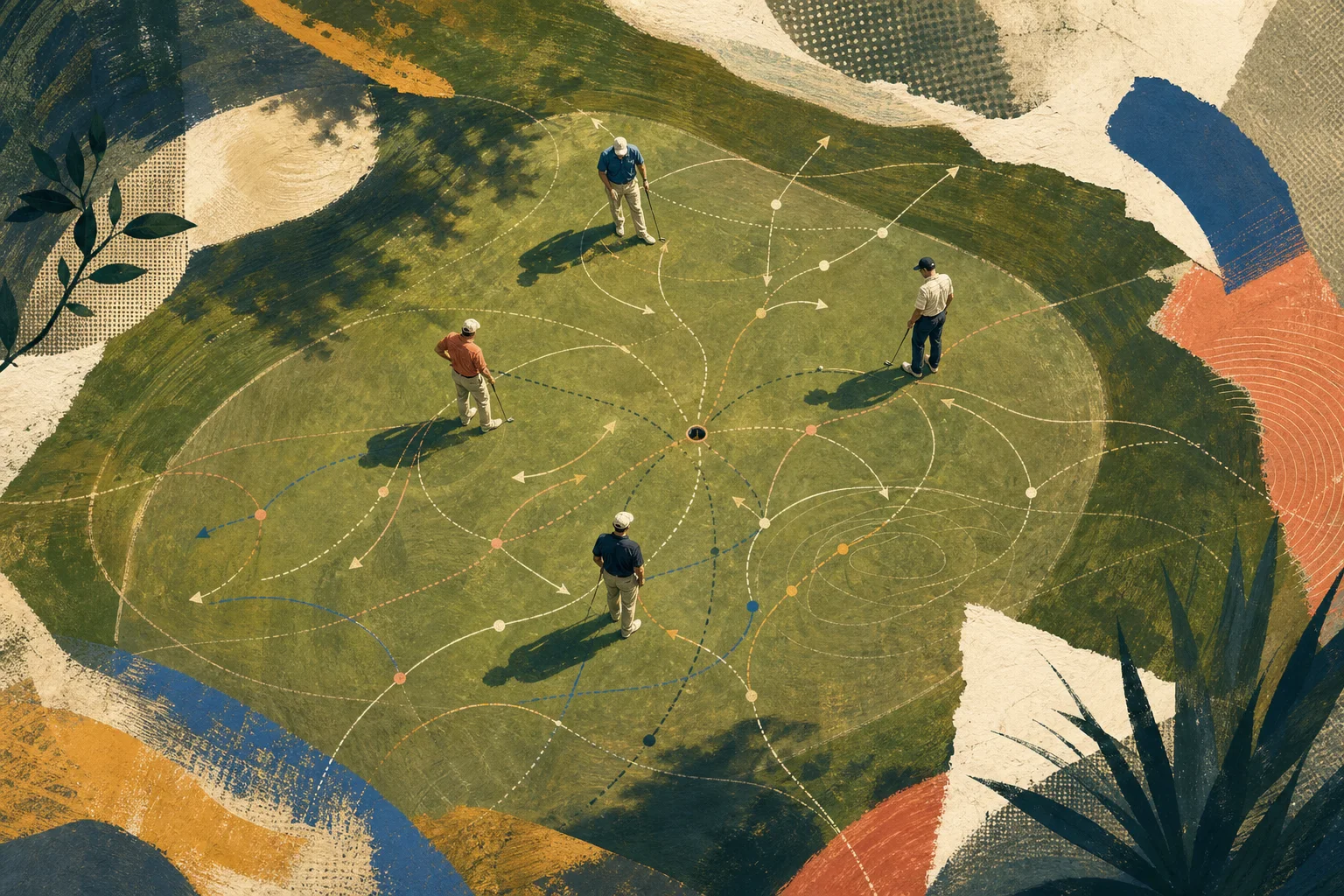
Then there is the part golfers underrate because it feels like the game itself. A round is several hundred decisions made under mild pressure. Club, wind, lie, slope, risk, and no two of them identical, because the course never hands you the same shot twice. That steady stream of fresh problems is exactly the kind of engagement cognitive researchers encourage. Green reading alone is quiet spatial work, holding slope, grain and speed in the mind at once, and the course asks for a fresh read eighteen times.
It may pay off faster than expected. In 2023, researchers at the University of Eastern Finland tested healthy golfers over 65 before and after three different outings: an 18 hole round, a six kilometer walk and a Nordic walking session of the same distance. All three improved attention and processing speed the same day. The study was small, 25 people, and it measured a single afternoon rather than a lifetime. Still, the direction is encouraging: one round, measurably sharper.
An honest summary stops short of calling golf medicine. These studies show associations and short term effects, and nobody earns five extra years by taking up the game grudgingly next Tuesday. What the research does show is that the habits most reliably tied to a healthy brain, regular movement, regular company, time outside and a steady diet of engaging problems, are the same habits a golf membership hands you without being asked. A brisk walk delivers one of them. A crossword delivers another. A walked fourball delivers the set.
Which reframes the standing game. It is easy to treat the Tuesday round as the thing that gets skipped when life crowds in, since it looks like leisure from the outside. The research suggests treating it more like the appointments you keep. Book it for the golf. The rest comes along in the same four hours, and it never once feels like a prescription.