
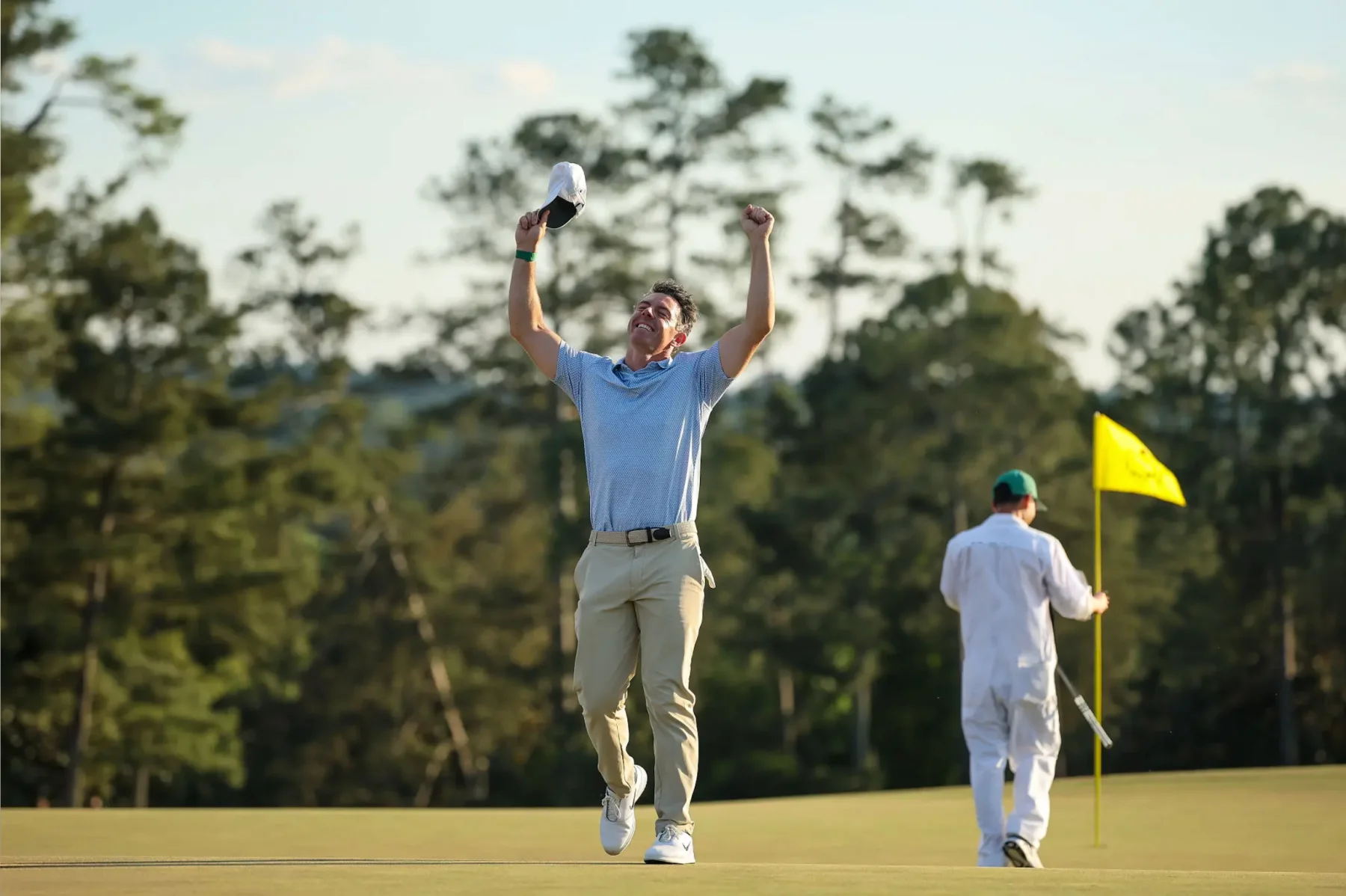
When Rory McIlroy holed the winning putt at the 2025 Masters, the reaction said as much as the result. He crouched on the green, covered his face and stayed there for a moment before anyone could reach him. It did not look like a man celebrating one good week. It looked like a man finally putting down something heavy he had carried for years.
The win completed the career Grand Slam, the rare feat of winning all four professional majors. McIlroy became the sixth player in the modern era to do it, joining Gene Sarazen, Ben Hogan, Gary Player, Jack Nicklaus and Tiger Woods. He was the first European to manage it. Those are the facts that filled the headlines, and they are worth remembering.
But the better story is the part that came before. McIlroy won four majors by the time he was 25. Then he waited eleven years to win his fifth. For most golfers, the lesson is not in the green jacket. It is in the long gap that came first.
The wait nobody planned for
By the summer of 2014, McIlroy looked unstoppable. He won the Open Championship at Hoylake that July, leading from the first round to the last. A few weeks later he won the PGA Championship at Valhalla, edging out Phil Mickelson by a single shot. That gave him four major titles before most players win one. He was being measured against Nicklaus and Woods, and the comparison did not feel like a stretch.
Then the majors stopped coming. Not the wins, the majors specifically. He kept winning regular tournaments. He kept climbing into contention at the events that mattered most. And year after year, for more than a decade, he walked off the course on Sunday without the trophy he wanted.
That is a long time to chase one thing. Think about what eleven years actually holds. Coaches changed. Equipment changed. Younger players arrived who had grown up watching him. The questions from reporters shifted from when he would win the next major to whether he ever would again. He answered the same question hundreds of times, and the honest answer was that he did not know.
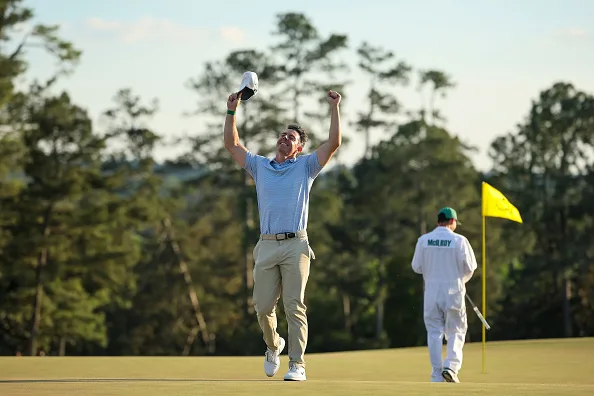
Showing up is the hard part
It is easy to admire a comeback after it works. The harder thing to notice is what the wait demands while it is still going.
McIlroy could have protected himself. He could have skipped the events where he kept falling short. He could have managed expectations, talked down his chances, found reasons the majors did not matter as much as people said. Plenty of athletes quietly do some version of that. It hurts less to stop trying than to try and miss in front of everyone.
He did the opposite. He kept entering. He kept contending. He kept putting himself in position to lose, which is the only way to stay in position to win. At the 2025 Masters itself he gave back a lead more than once on the final day, including a stumble that would have ended a lot of players. He still found a way to win in a playoff against Justin Rose.
That willingness to keep showing up, knowing it might not work, is the part most of us skip. We tend to stop trying right before the thing might turn, because the trying is uncomfortable and the result is not promised. McIlroy kept his hand up for eleven years.
What made it harder is that he did it in full view. Every failed Sunday played out on television, and every one came with a new round of questions about whether the talent had slipped or the nerve had gone. Most of us get to struggle in private. We can lose a match, miss a target at work or skip a goal without a crowd watching. He had to keep trying while the whole sport debated whether he still had it. That is a different level of pressure, and he chose it again and again instead of hiding from it.
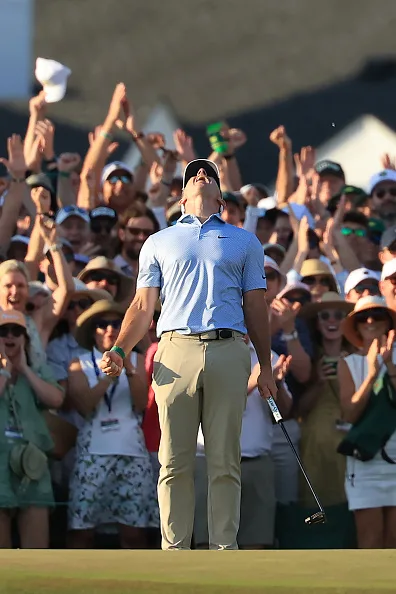
What this looks like for the rest of us
Most readers are not chasing a green jacket. But almost everyone is waiting on something that has taken longer than expected. A business that has not turned the corner yet. A goal at work that keeps slipping. A handicap that has not moved in three seasons no matter how much range time you put in.
The instinct in those stretches is to assume the lack of progress means something is wrong with you. McIlroy’s wait is a useful counterweight. Here was one of the most talented golfers alive, working as hard as anyone, with every resource available, and he still needed eleven years. Talent did not make the wait shorter. Effort did not make it shorter. The only thing that worked was staying in the fight long enough for the timing to line up.
There is freedom in that idea. If progress can stall even for the best in the world, then a slow stretch in your own life is not proof of failure. It might just be the wait before the result.
Patience is not passive
It is worth being clear about what patience actually means here, because the word gets used lazily. Patience is not sitting back and hoping. McIlroy did not wait around for the majors to come to him.
During those eleven years he rebuilt parts of his game. He worked on his putting, which had been the weak link when the heat was on. He kept his body in shape so he could compete deep into his thirties. He changed coaches and changed thinking. The waiting was full of work. He was not standing still, he was grinding while the scoreboard refused to reward him.
That distinction matters for the everyday golfer too. Patience with your game does not mean accepting that you will never get better. It means doing the unglamorous work and giving it time to show up. The lessons you take this winter may not pay off until next summer. The new wedge technique might feel worse before it feels better. Patience is the discipline of staying with a good process even when the score has not caught up.
The golfers who improve late in life are almost never the ones chasing a quick fix. They are the ones who picked a sensible plan and stuck with it past the point where most people quit.
A calmer way to keep score
The most useful thing about McIlroy’s story is what it does to the idea of a timeline. We tend to assume good things should arrive on schedule. We set a date by which the business should be profitable, the weight should be off, the handicap should be in single digits. When the date passes, we treat it as a verdict.
McIlroy’s eleven years are a reminder that the timeline is mostly something we invent. The work is real and the goal is real, but the arrival date is not ours to set. His green jacket did not come a moment before it was ready to. The same is probably true for whatever you are waiting on.
So the next time you are stuck, on the course or off it, the question worth asking is not why it is taking so long. It is whether you are still doing the work and still showing up. If the answer is yes, you are doing exactly what McIlroy did for eleven years. The result tends to find people who refuse to leave before it shows.